The Setting
The block, the seminary, & the house.
Two centuries of history behind № 428. Select to read more.
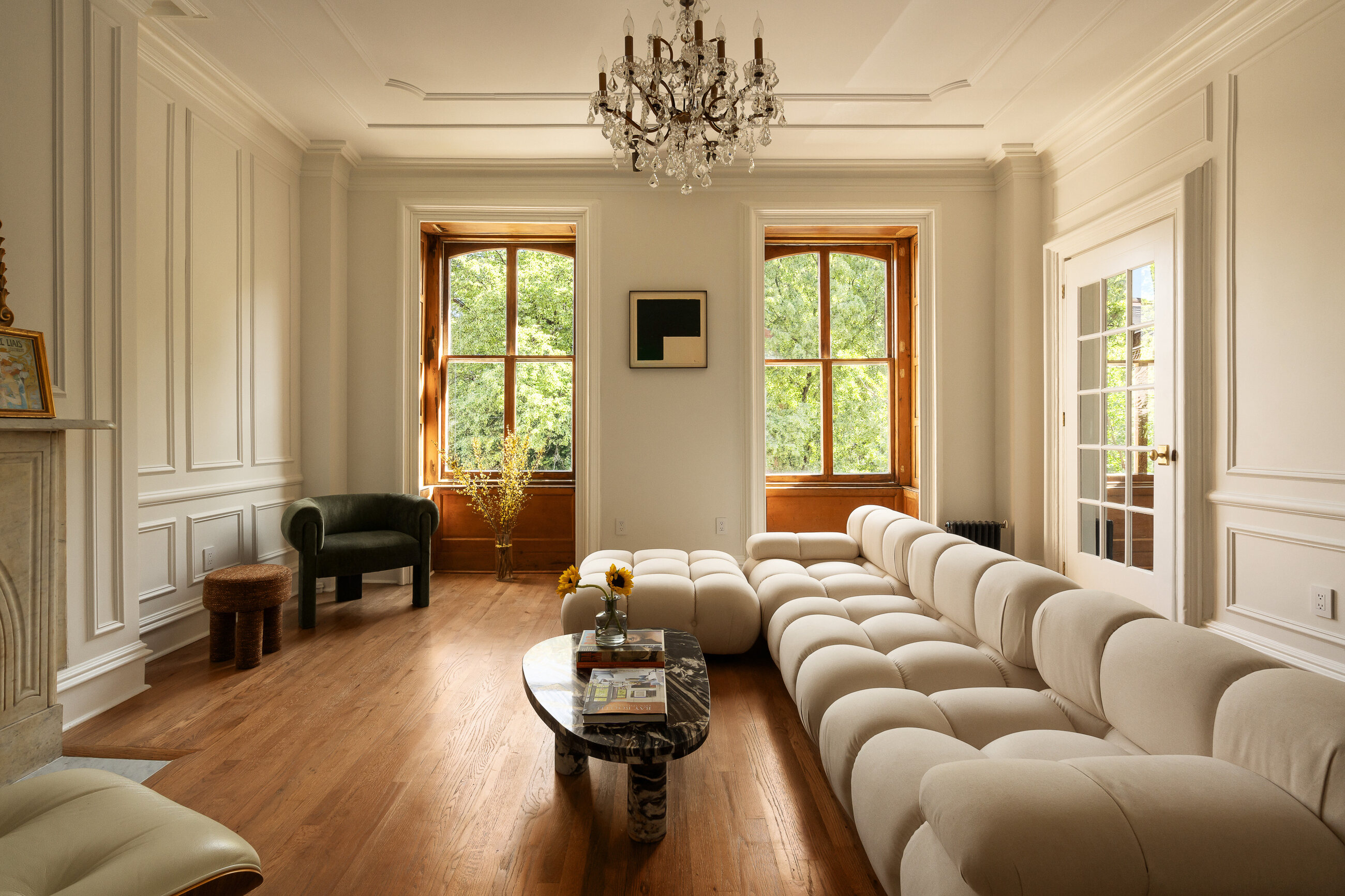
A few doors down, an 1857 condominium came to market with a real plan behind it: editorial photography, private previews, and a website of its own. It went into contract twelve days later. Here's the story.
Let's talk →A full plan built before the home hit the market, and a price set to where the market actually was.
The home was styled and prepared so buyers saw it at its best, from the first photo to the final walkthrough.
Invitation-only previews for brokers and buyers, building interest before the home ever went live publicly.
Professional photography, video, and a 3D Matterport tour, so the home looked as good online as it did in person.
A custom site to tell the full story of the home and the block. You're reading it right now.
Featured placement, press, and social reach that put the listing in front of serious buyers, with more than 100 of them through the door within days.
The result: in contract at full asking price, twelve days after launch.
*Reviews via Google & Facebook. **2026 Ellies Awards for 2025 transactions at Douglas Elliman. ***Based on sales transactions over twenty-plus years.
From day one, Justin and the Dixon Advisory Team treated our sale like a launch, not a listing. They hosted private previews for buyers and brokers before we went live, created a custom website to tell the full story of our property, and generated marketing coverage we were genuinely proud to share. We were in contract at full asking price in under two weeks. If you're a neighbor thinking about selling, we can't recommend them enough.
Everything below is the actual campaign that sold 428: the photography, the floor plan, the story of the block. Picture your own address in its place.
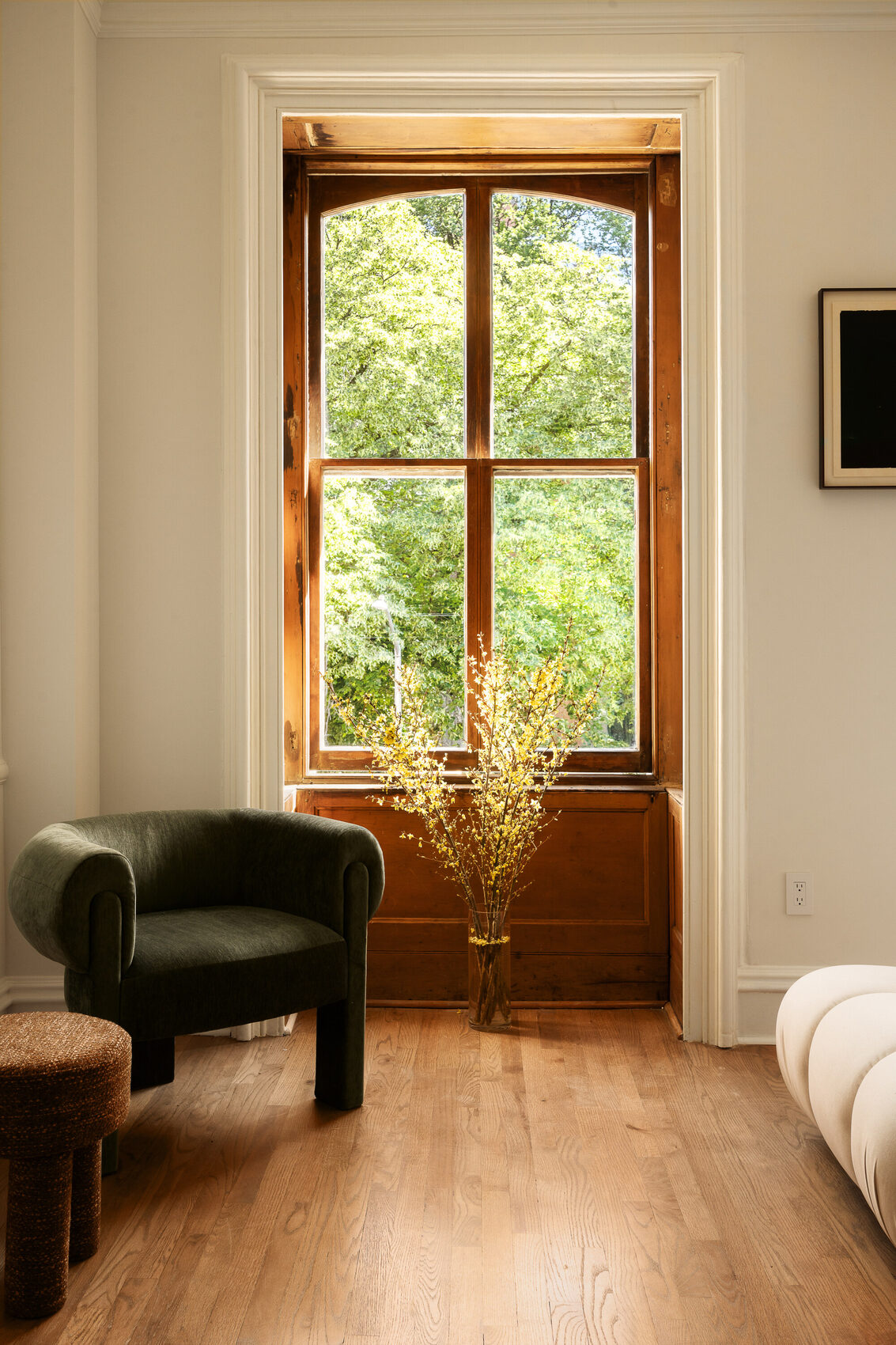
The floor was reconfigured for true north–south light. To the north, a full wall of glass faces the trees of the General Theological Seminary garden, directly across the street; to the south, the home opens to the rear and the private terrace.
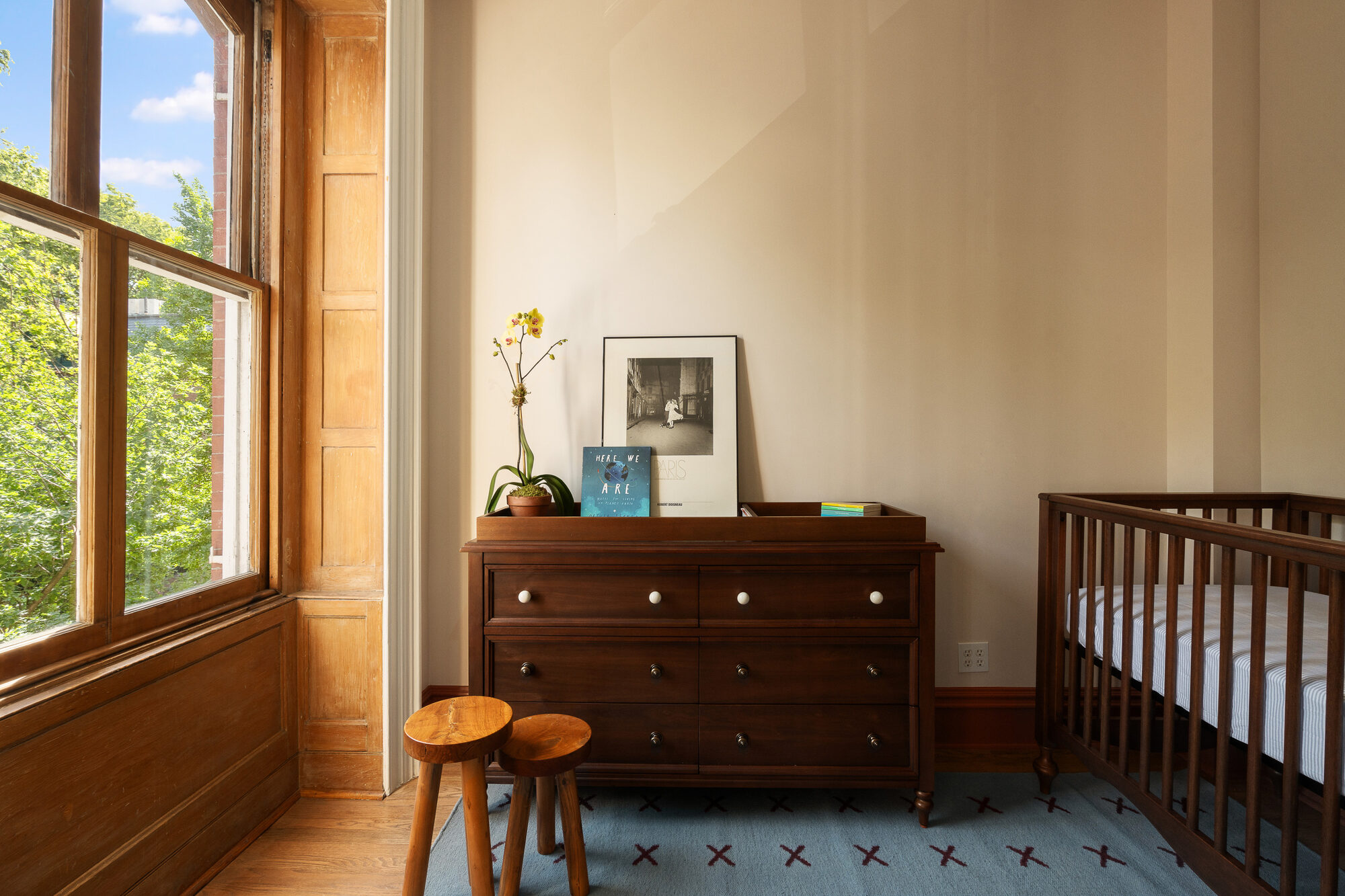
High ceilings and oversized windows carry it from morning to evening: cool and even from the north, warm from the south by afternoon.
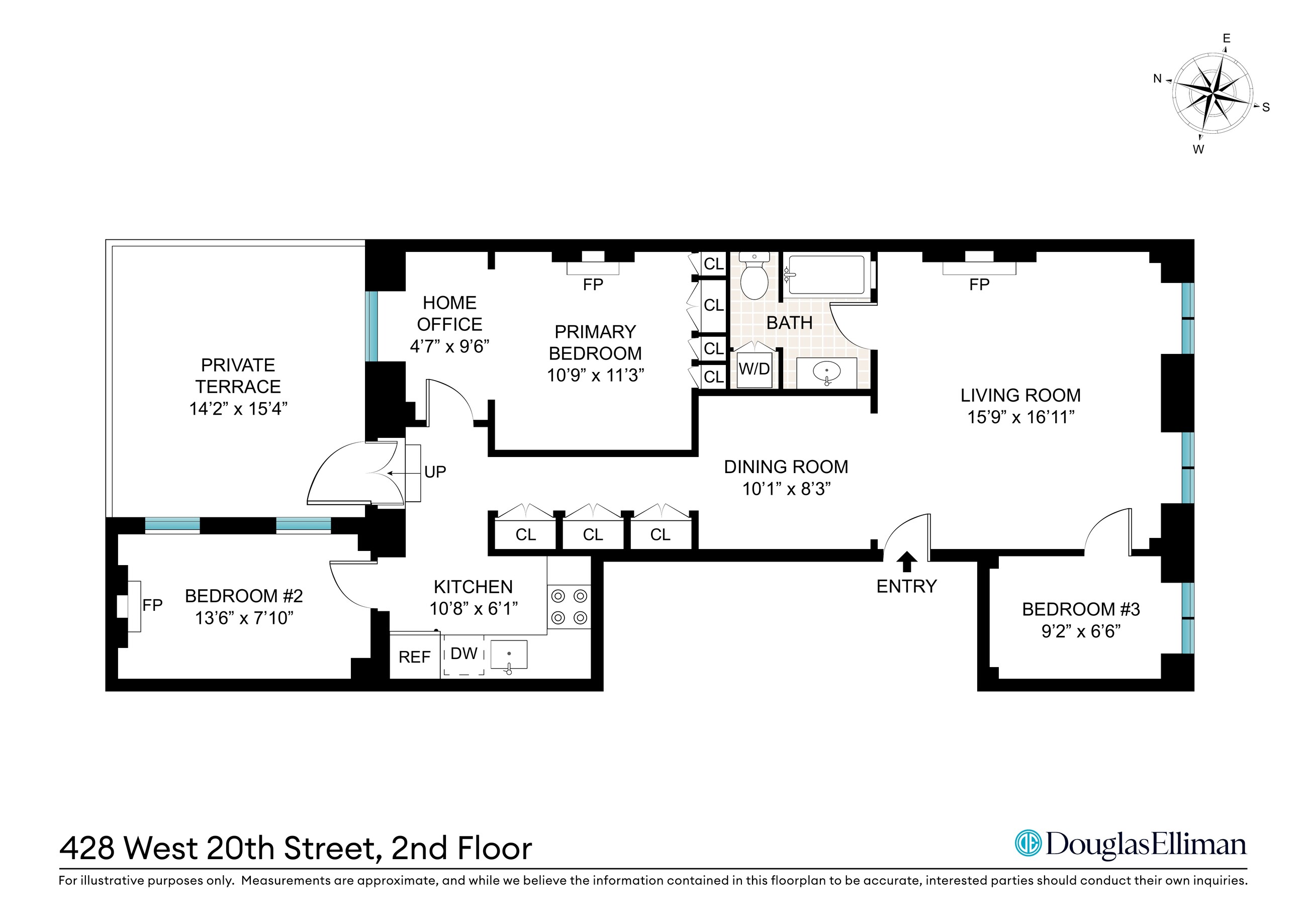
For illustrative purposes only. Measurements are approximate.
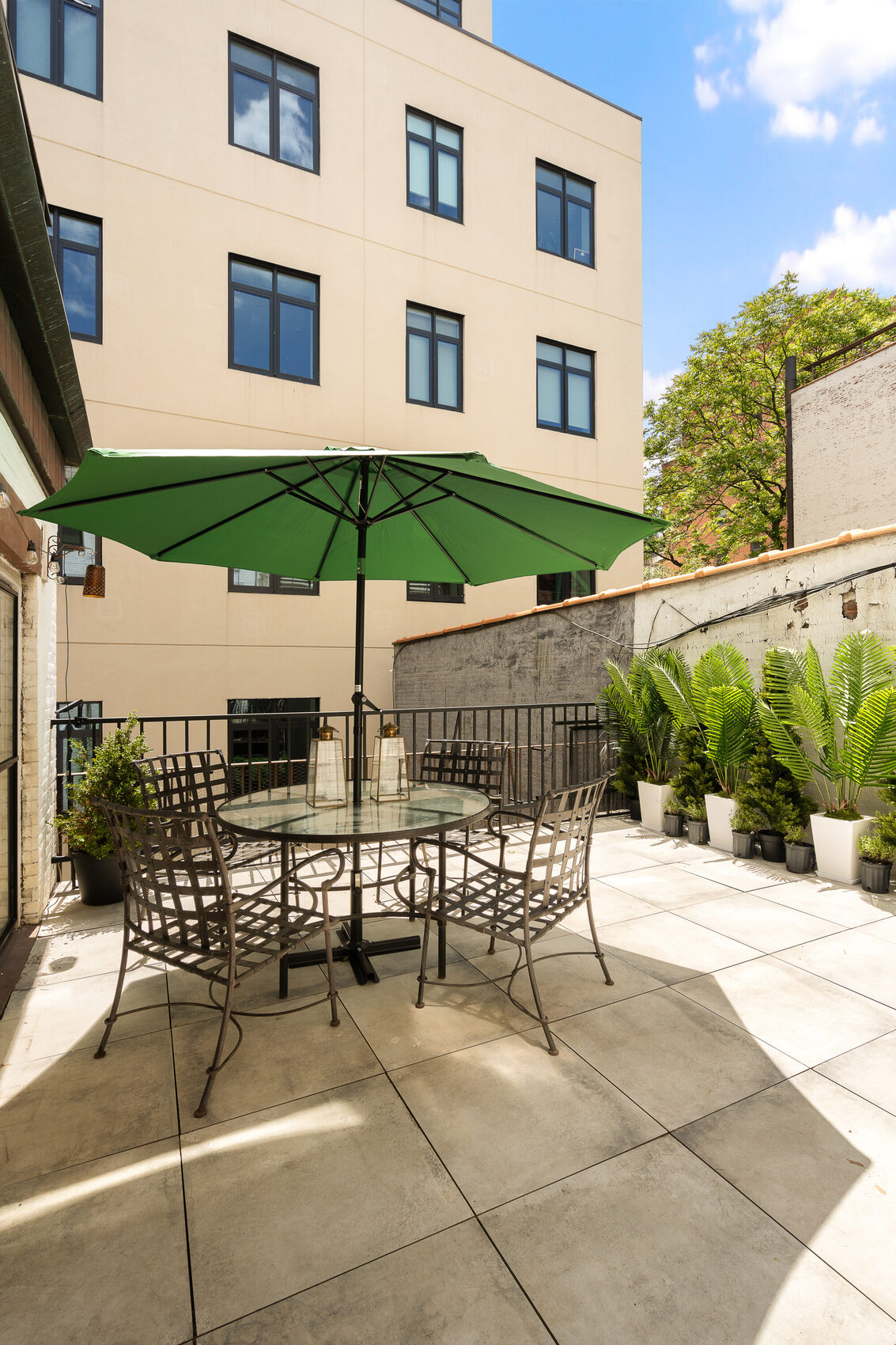
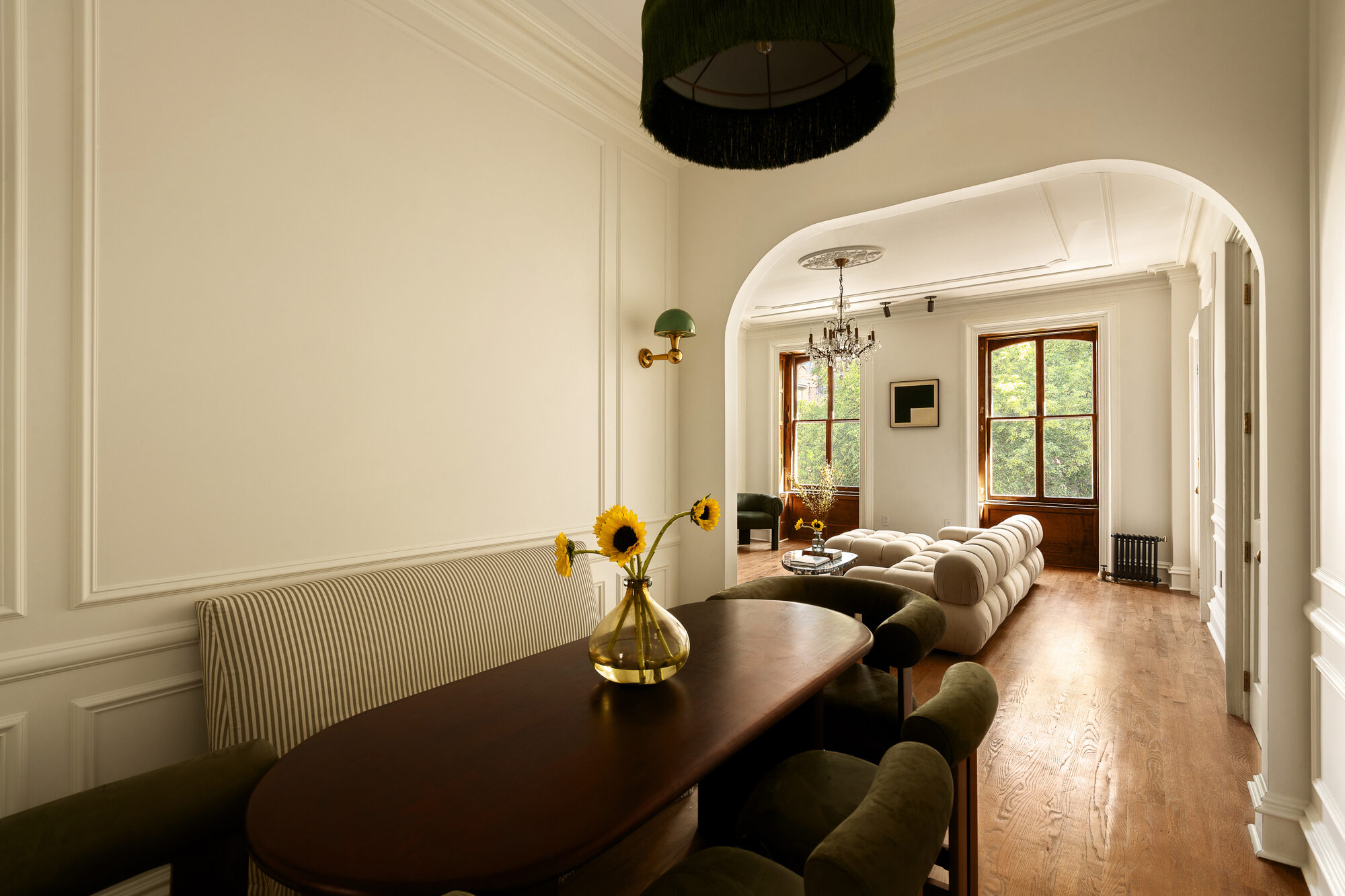
Down the arched hallway, a private terrace of roughly 215 square feet, room for a table, a few chairs, and an umbrella against the afternoon sun.
Between Ninth and Tenth Avenues, the 400 block of West 20th Street is widely considered the most graceful residential block downtown. It contains the oldest house in Chelsea. The finest unbroken row of Greek Revival residences in New York City. The garden of the General Theological Seminary, donated in 1819 by the man who wrote 'Twas the night before Christmas.
Every house on this block was built under the same covenant, written by Clement Clarke Moore himself, requiring brick facades, a ten-foot setback from the curb, and no commerce of any kind. Nearly two hundred years later, the rule still holds.
The second floor of № 428 (a three-bedroom condominium, freshly renovated by its current owners, with a private terrace) is now offered as an exclusive listing. What follows is the house, the block, and the two centuries behind them.
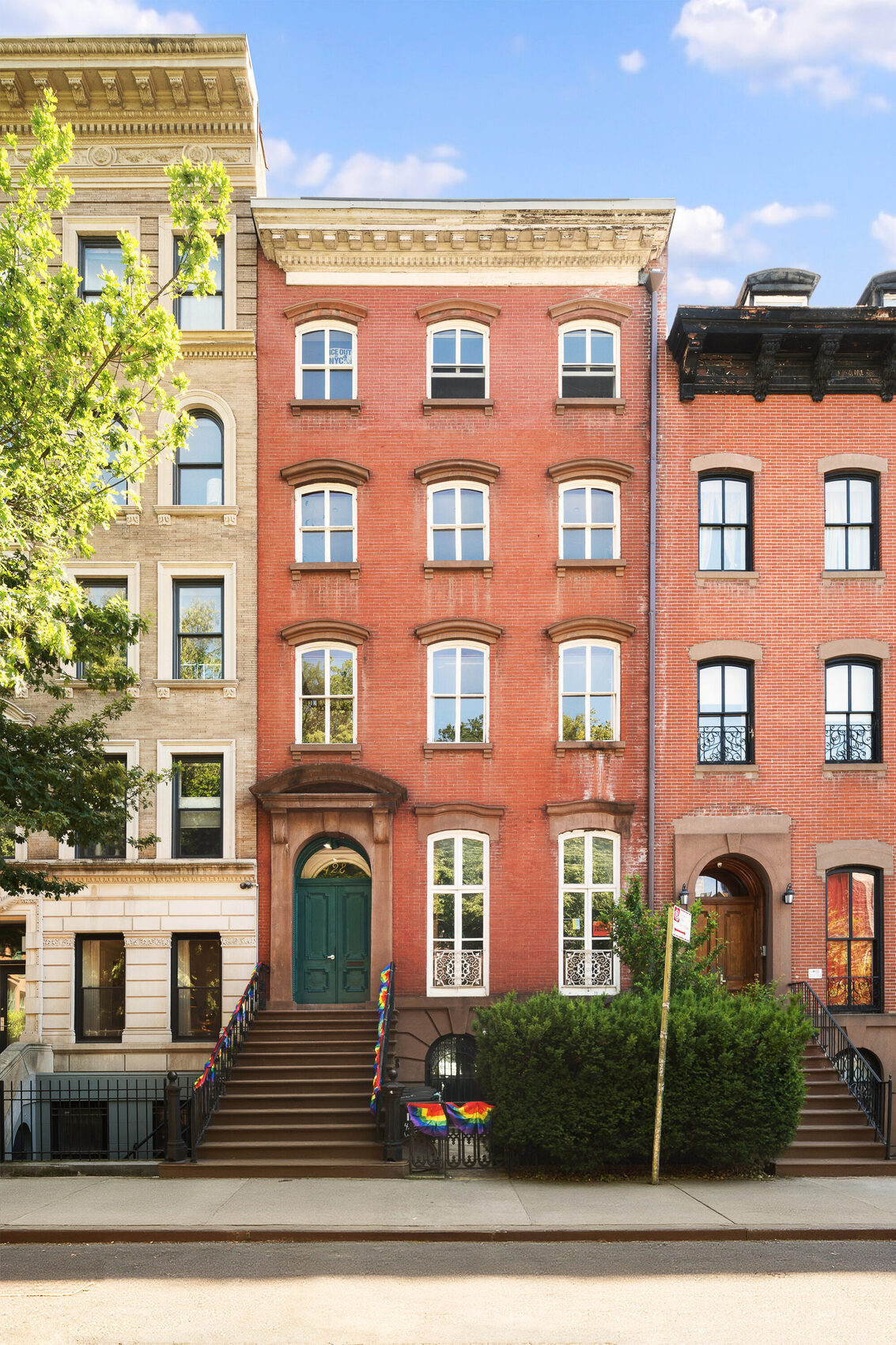
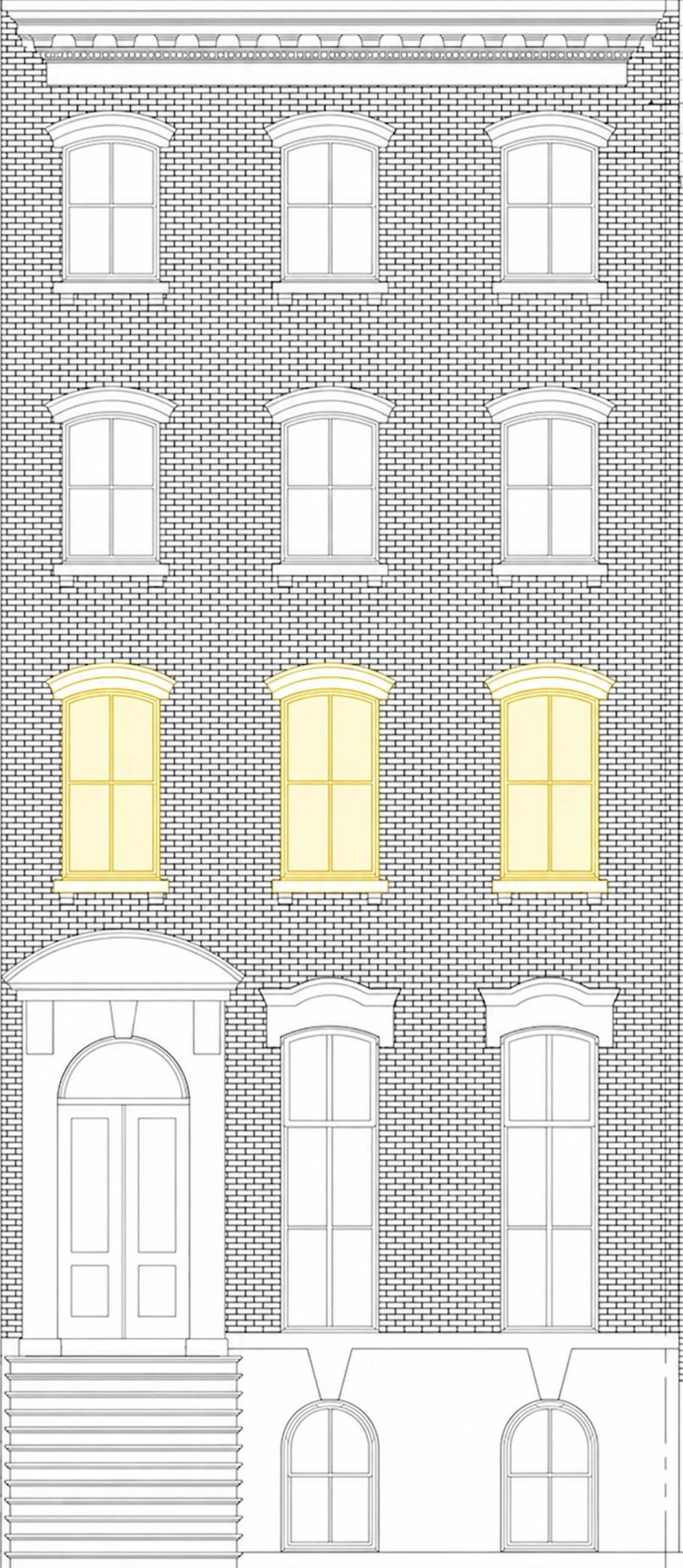
№ 428 is one of a row of brick townhouses built under Clement Clarke Moore's covenant: a uniform cornice line, a ten-foot setback, and the same red brick from end to end. The second floor sits behind the tall windows on the drawing below.
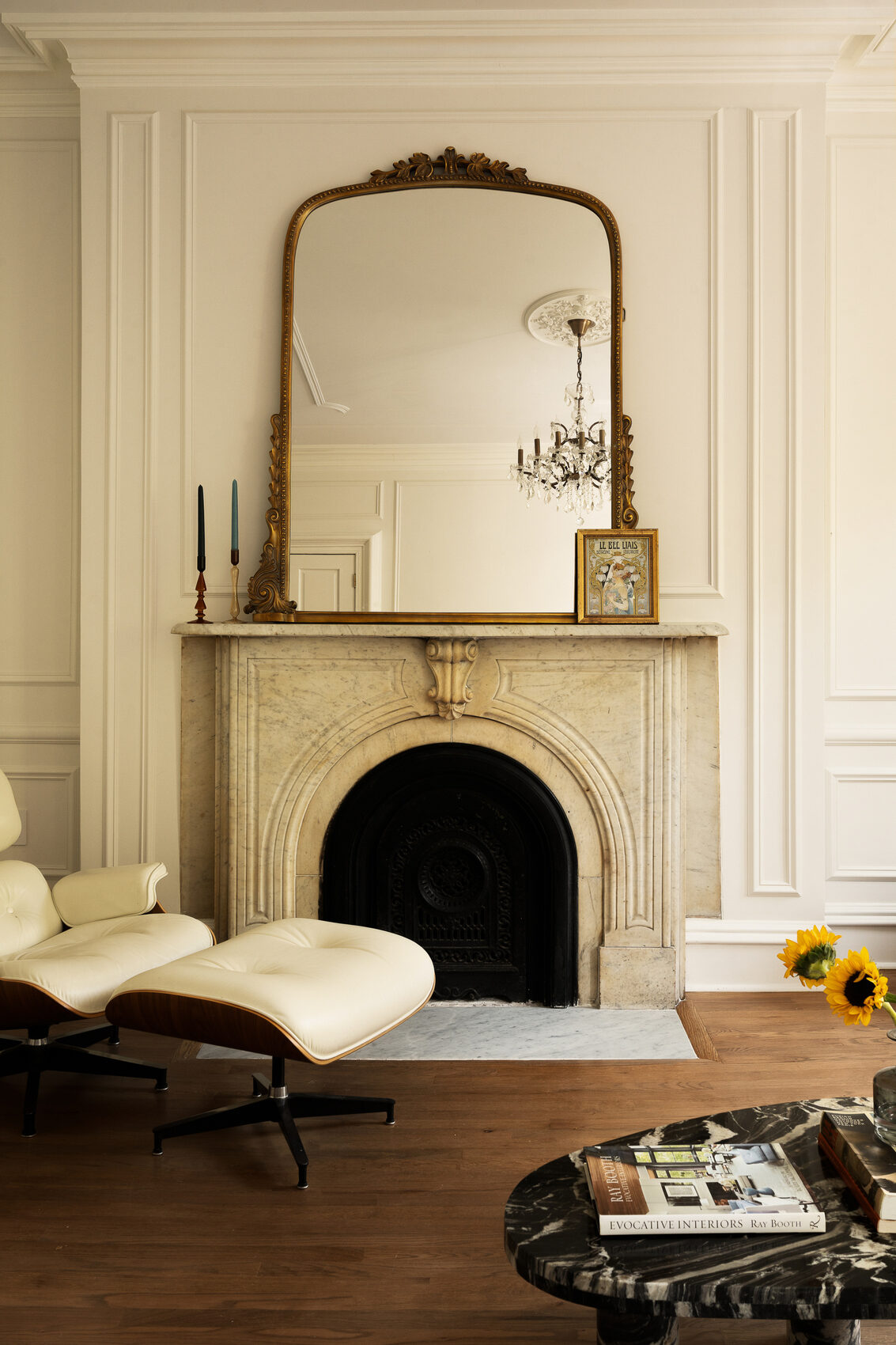
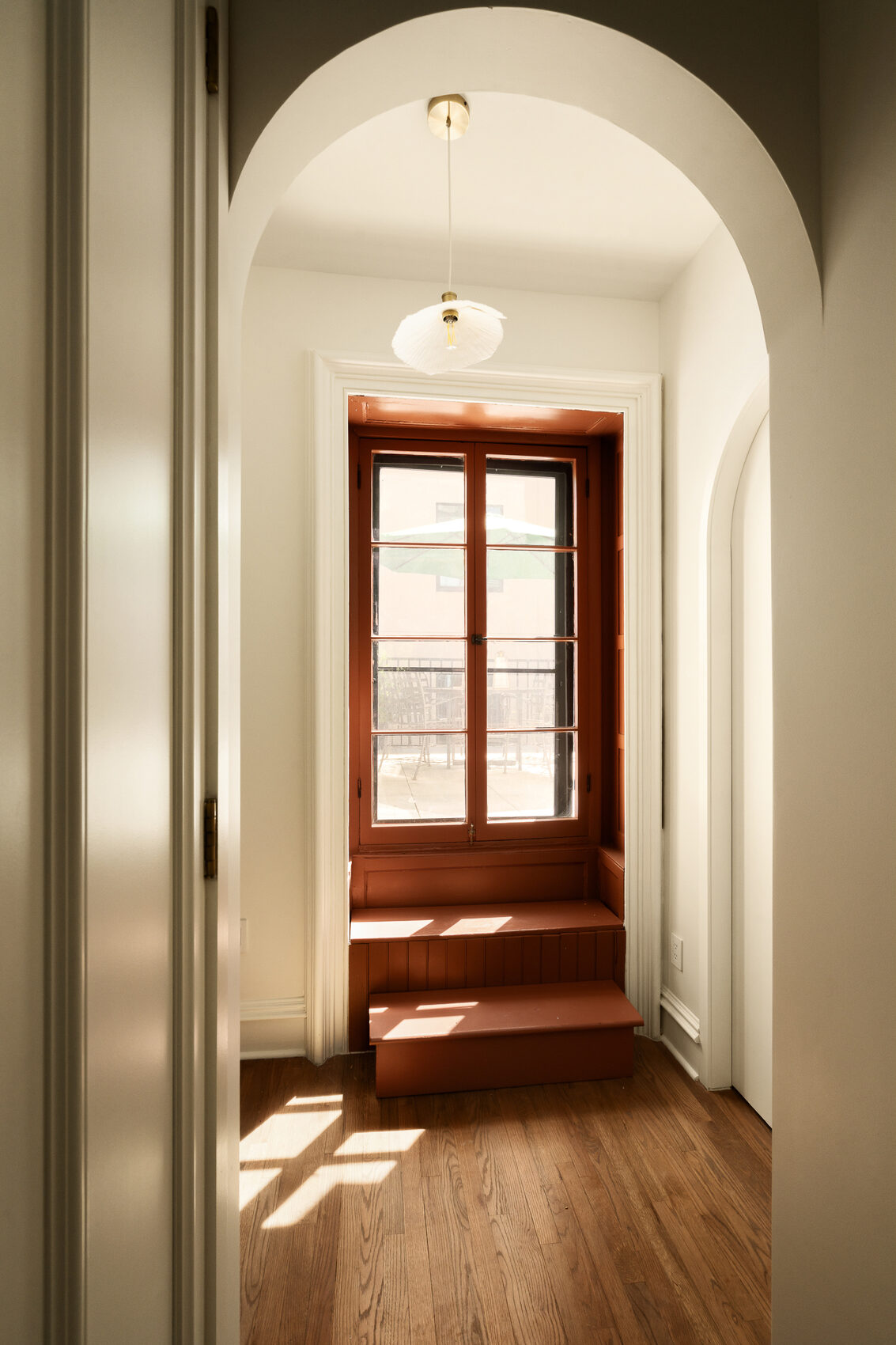
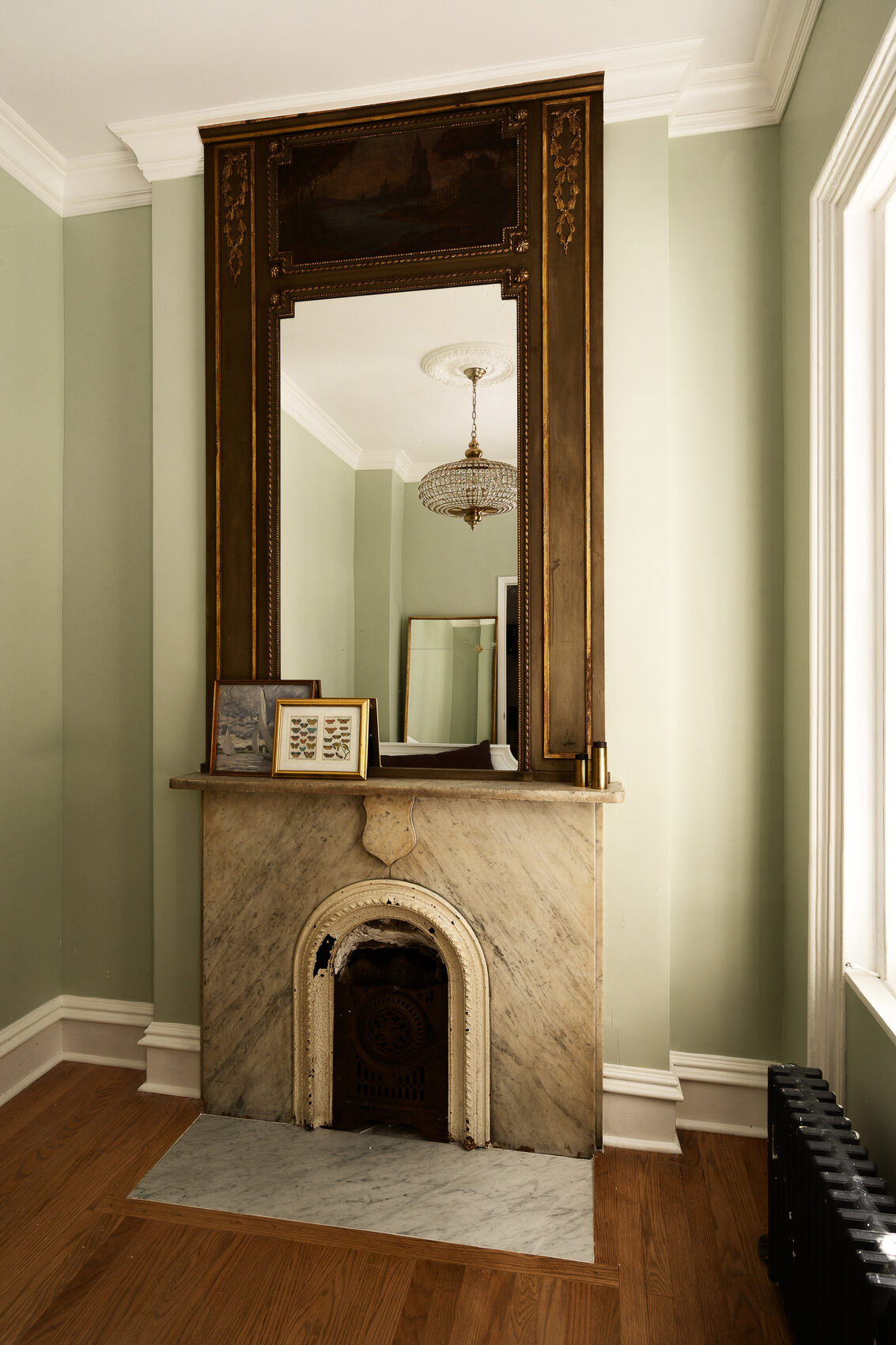
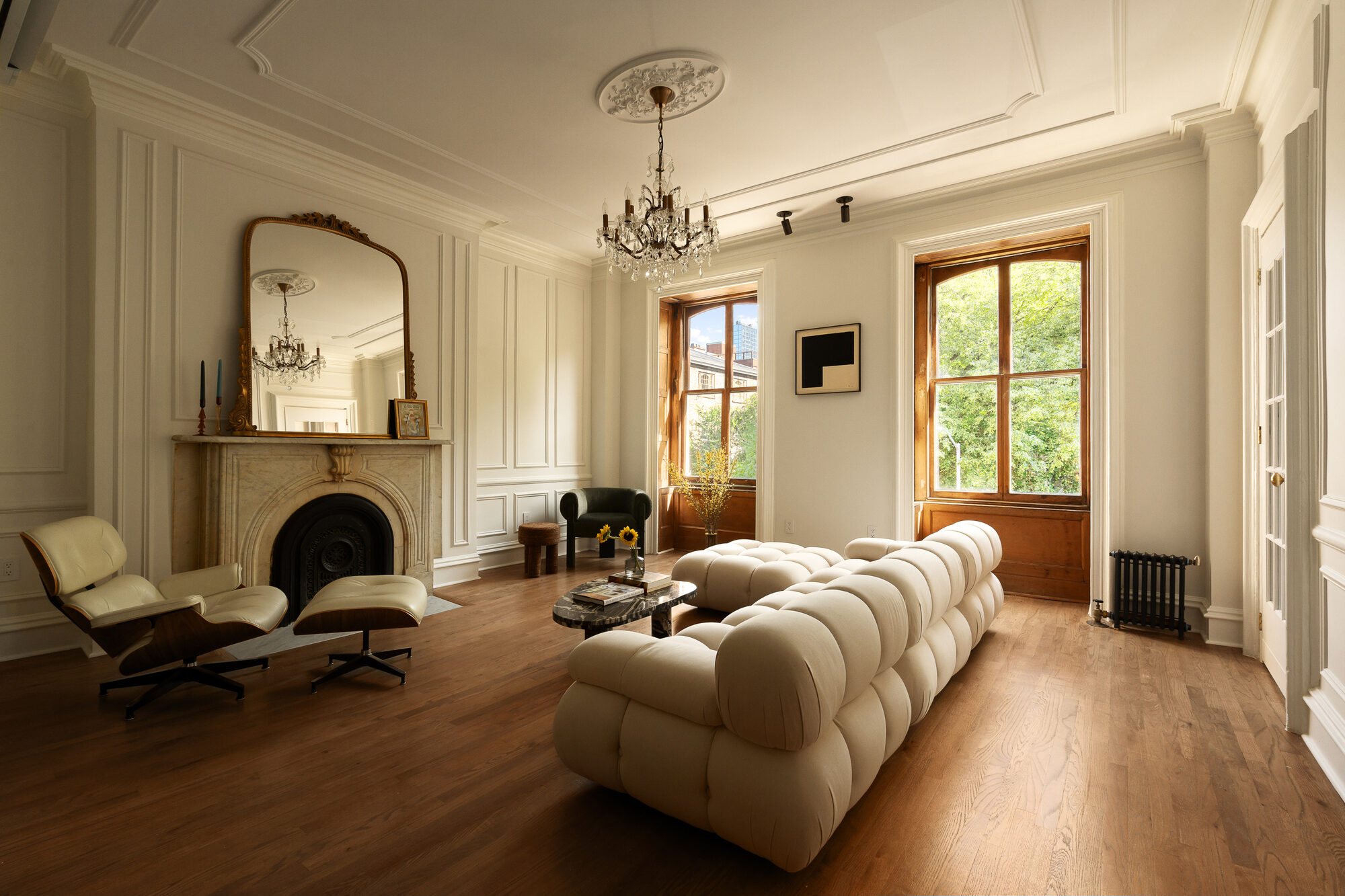
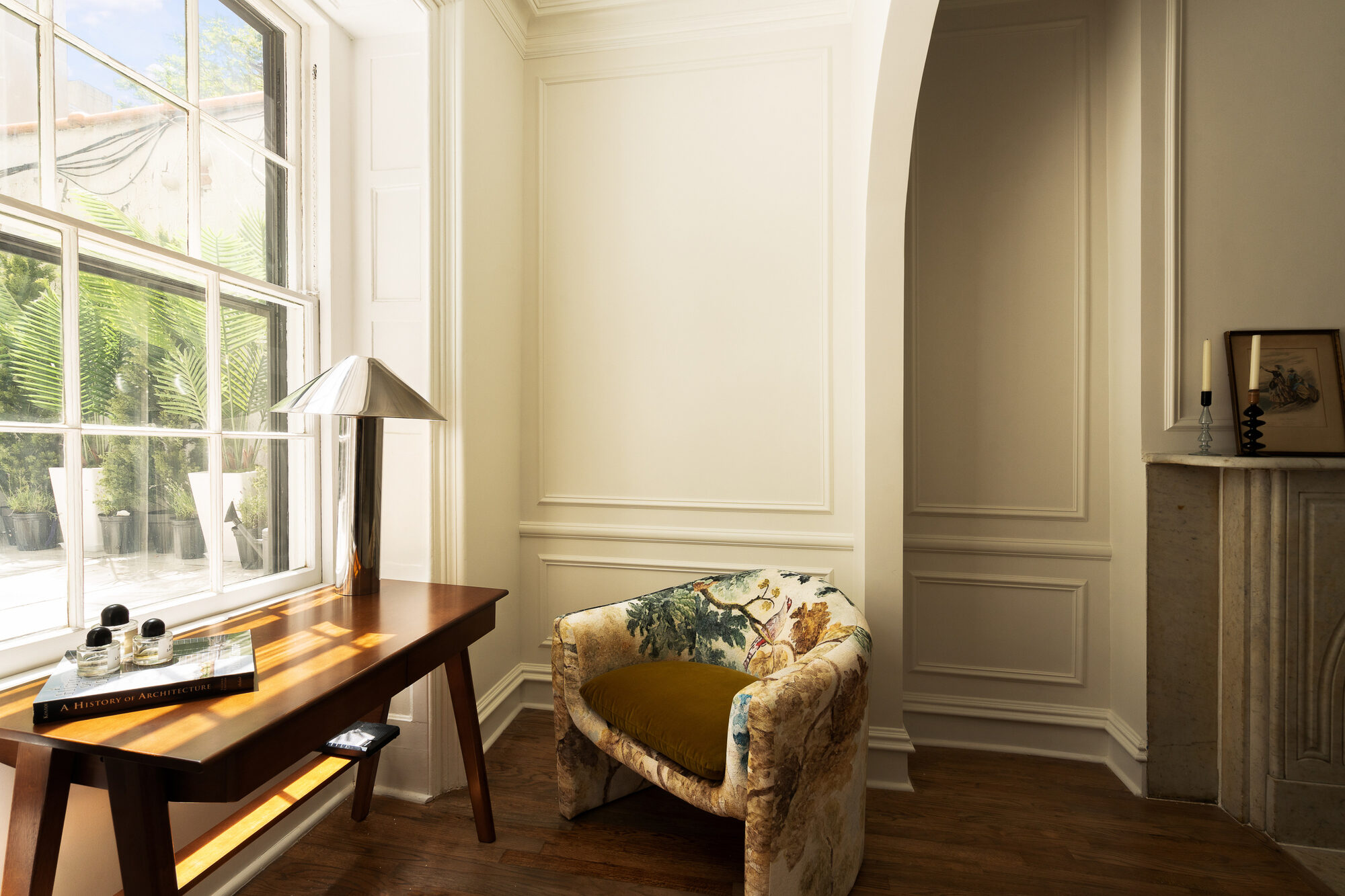
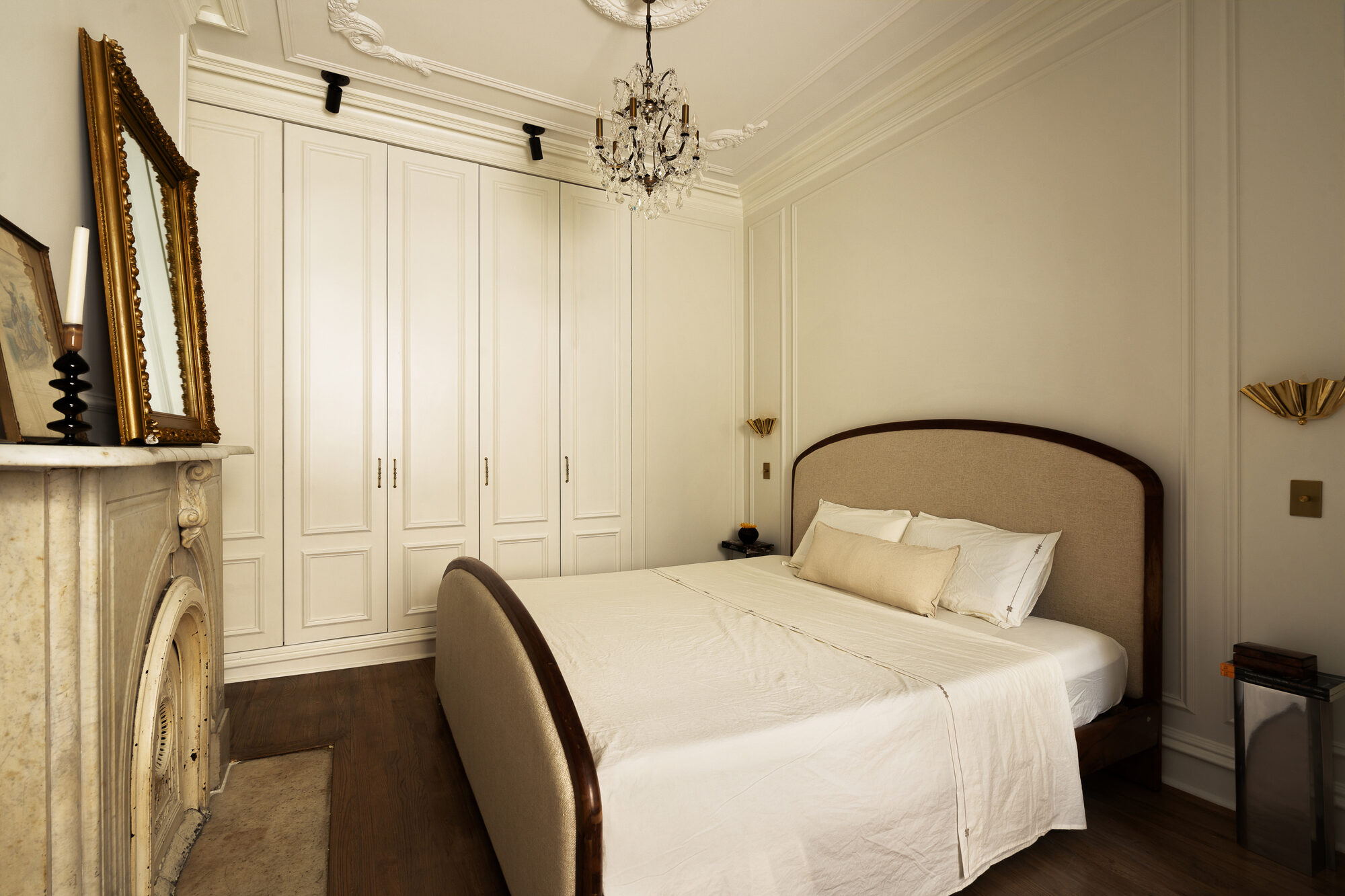
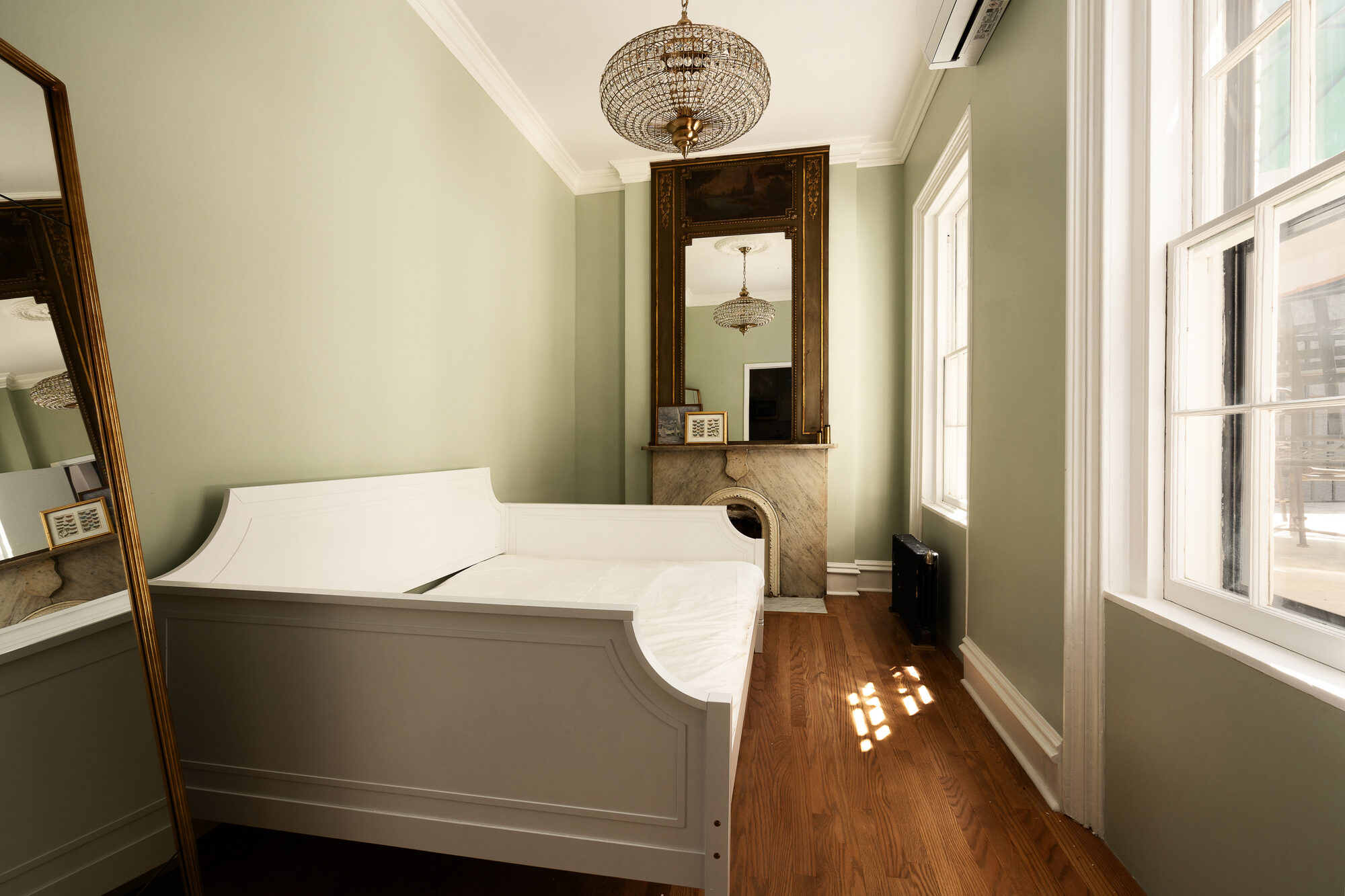
Original fireplace surrounds, paneled doors, and millwork, preserved and restored through the renovation rather than replaced.
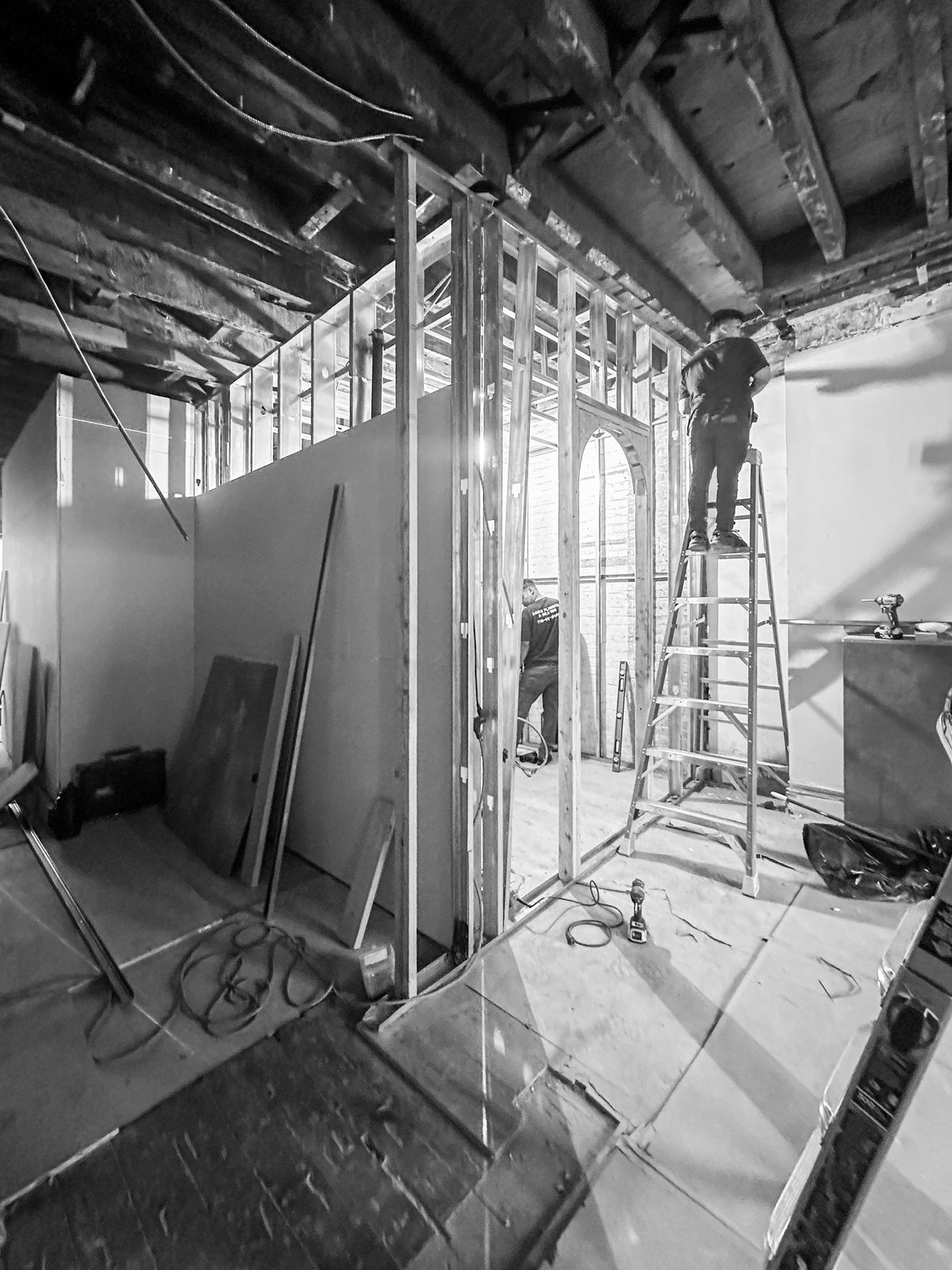
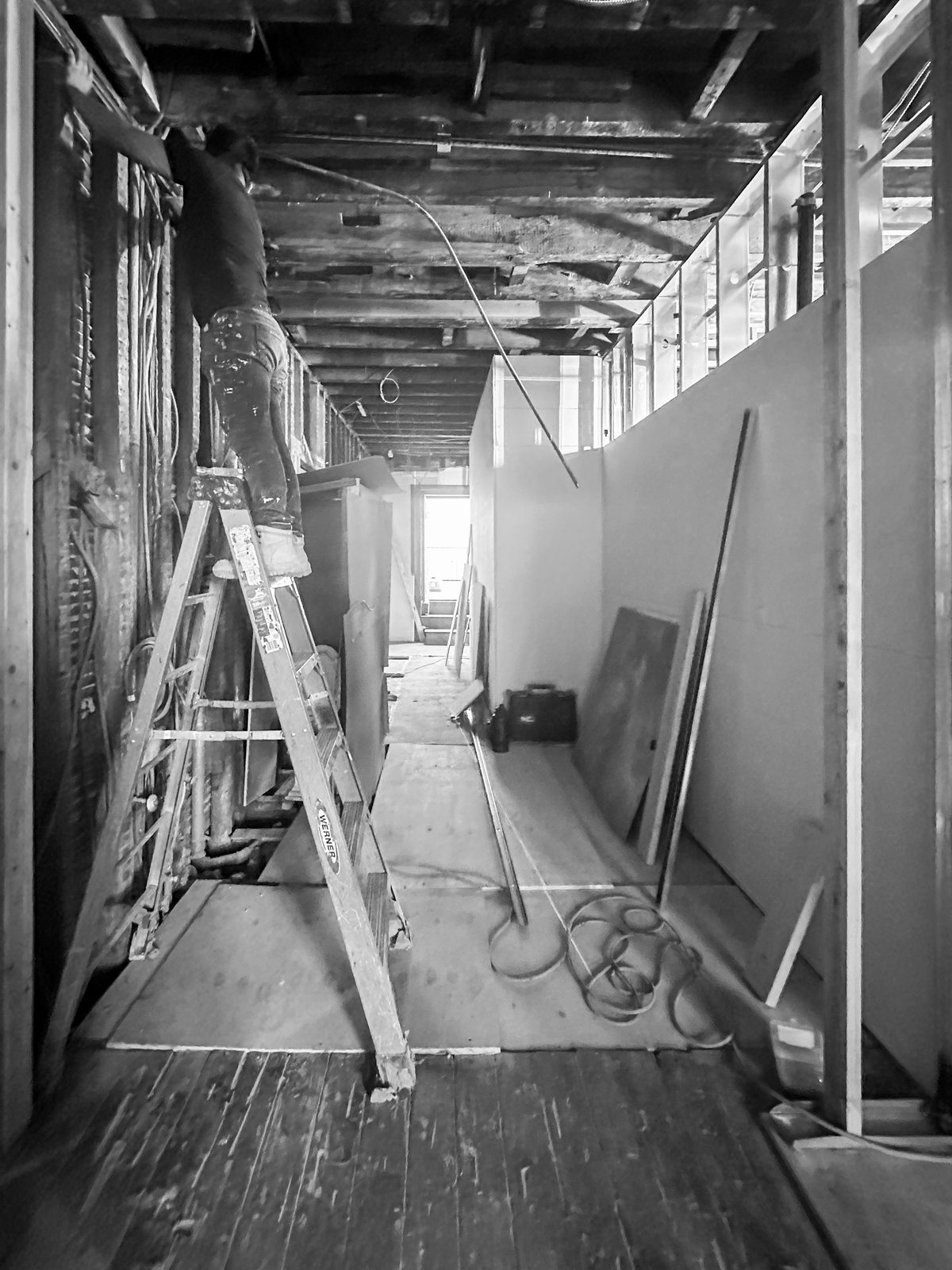
Taken to studs over a year, with architecture by Graphite Architecture Studio and interiors by JOIA. The floor plan was reorganized for true north–south light; the original fireplace surrounds were preserved, and period crown molding kept and extended with bespoke millwork, abundant closets, and four custom ceiling medallions. The palette is restrained and consistent throughout: aged and antique brass on every fixture and sconce, Visual Comfort lighting, Lutron Claro switches, and Emtek French-brass door hardware. The primary bath is finished in checkered black-and-white marble underfoot, and a Bosch washer and dryer is installed in-residence.
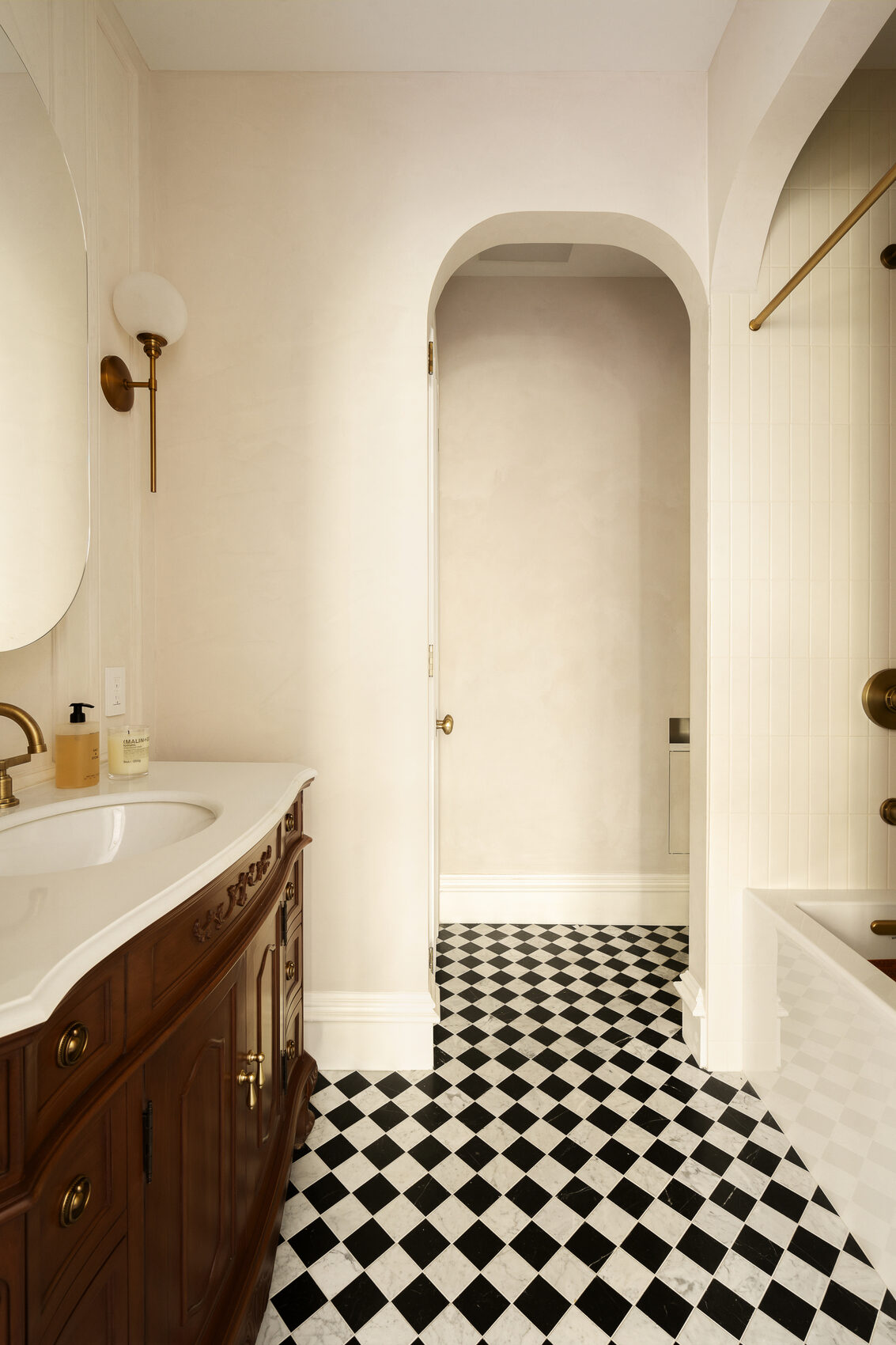
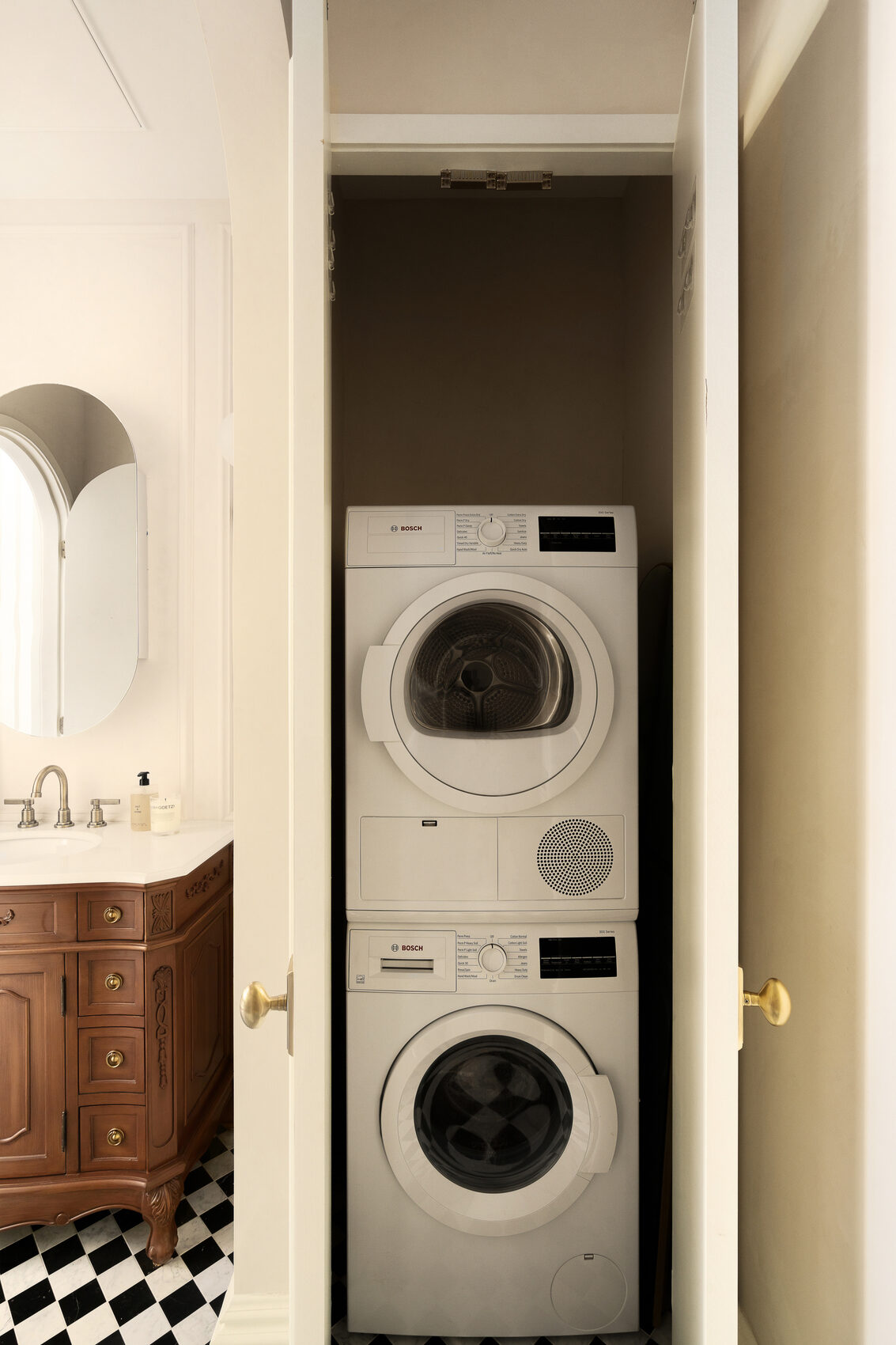
Finished: the primary bath in checkered marble with aged brass, and an in-unit washer and dryer.
Renovation by Graphite Architecture Studio. Interior design by JOIA.
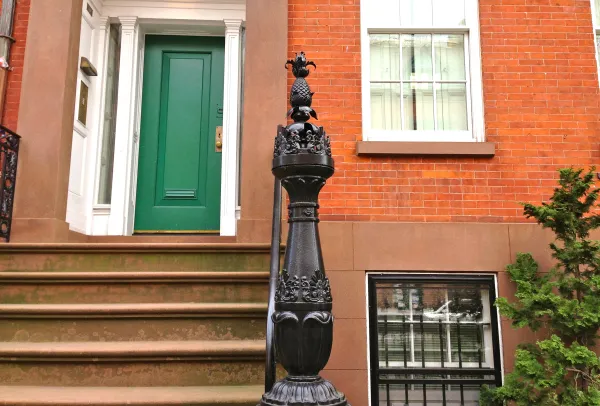
"The block of West 20th Street in Chelsea between Ninth and Tenth Avenues is one of New York's most graceful."
If you live on the block, or anywhere nearby, and you've ever wondered what your home might sell for, let's talk. No pressure and no obligation, just a clear and honest read on your home and today's market, from the team that just sold 428 at full ask.
Justin will be in touch shortly.
Two centuries of history behind № 428. Select to read more.
Walked from east to west, from Ninth Avenue to Tenth, the south side of the 400 block reads like a syllabus in American residential architecture: Federal, Greek Revival, Italianate, and a handful of Italianate-inspired late additions, all built within the same Moore covenant, all looking north toward the Seminary garden.
Donated by Clement Clarke Moore in 1819, the eight-acre Close of the General Theological Seminary has been the unbroken northern view from every house on the block for nearly two centuries.
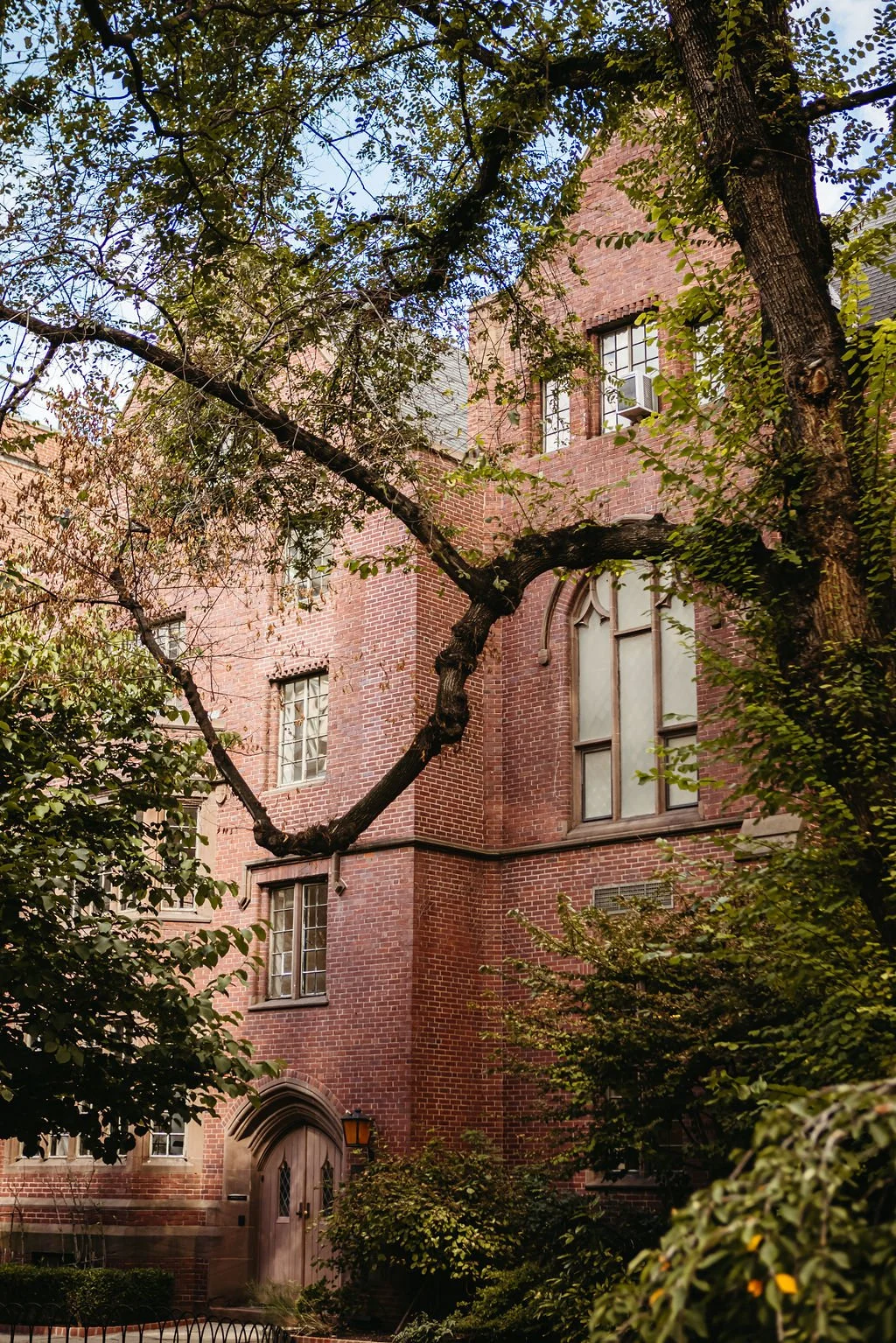
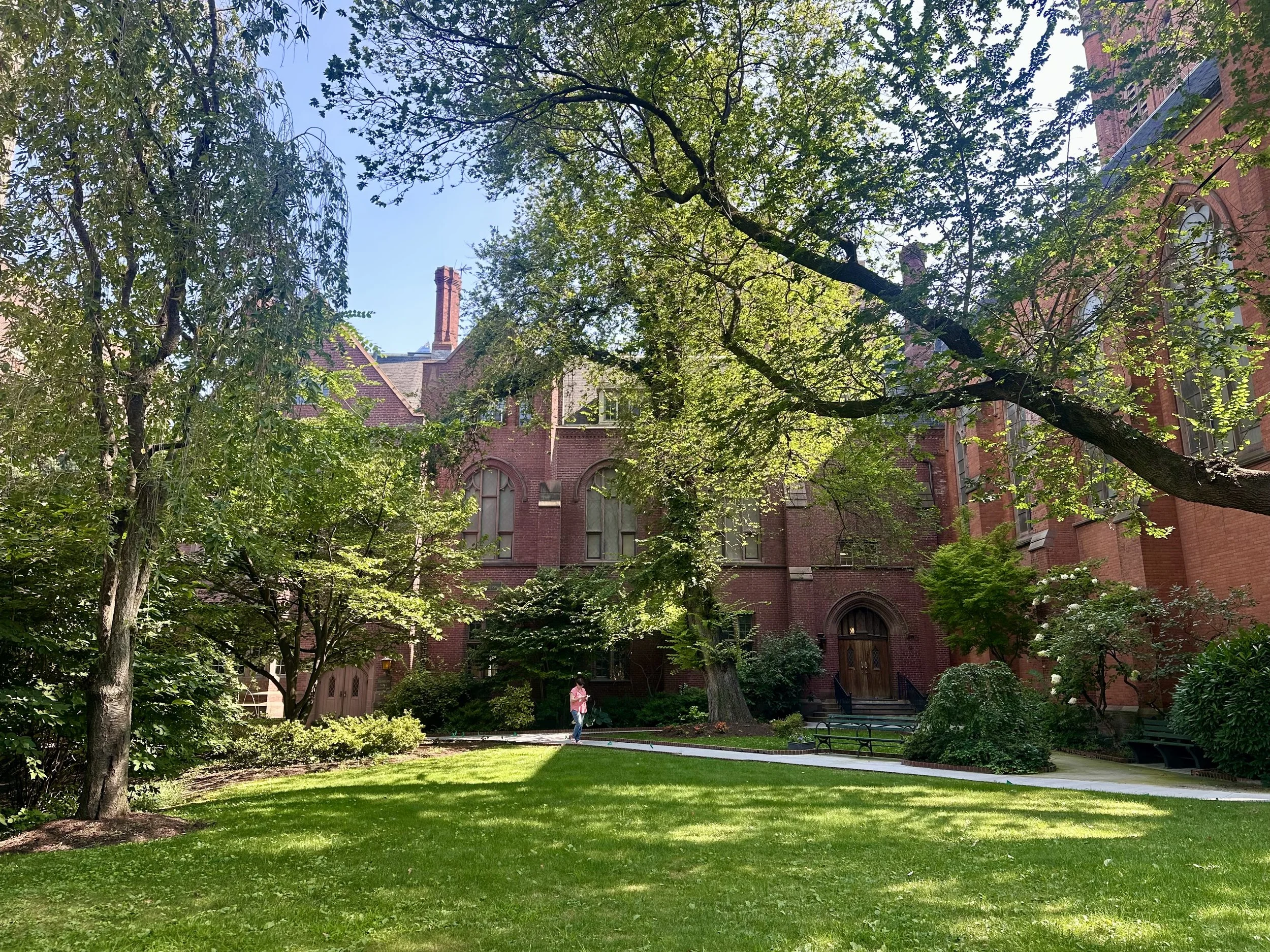
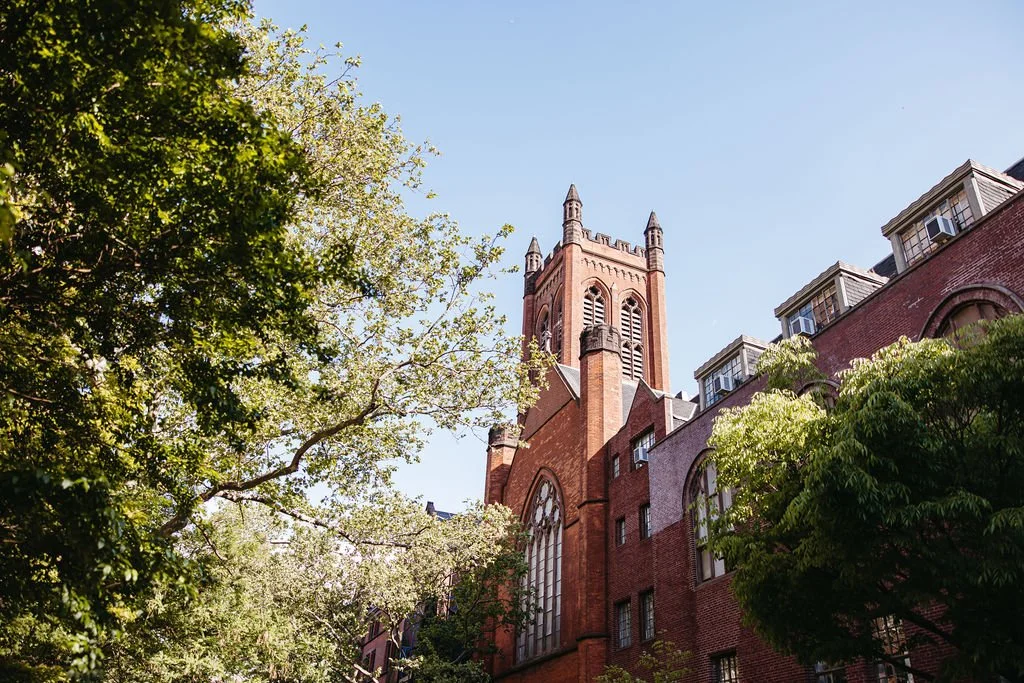
The General Theological Seminary, founded 1817 · the Close, designed by Charles C. Haight, 1883–1902
A four-story Italianate townhouse, completed in the late autumn of 1857, has hosted seven generations of New Yorkers. A summary of who has lived inside.
The story of 428 West 20th Street is not the story of a single owner, but of the people who have moved through its rooms since the year before the Civil War: a builder, a young family, a journalist, a Quaker theologian, a Prohibition-era restaurateur, and, most recently, two software engineers who restored it.
Each generation left something. Original stone fireplace surrounds. Window shutters. Built-in bookcases. Wide-plank floors. The 215-square-foot terrace overlooking the seminary garden. And, as of last year, a renovation that prepared the house for whatever the next chapter holds.
The 400 block sits at the center of everything that makes this corner of Manhattan singular: its tables, its galleries, and the green of the waterfront, nearly all within a short walk.

Justin spent twelve years building products at Spotify, Uber, and Amazon before carrying that operator's craft into luxury residential real estate. His practice is built on deeper diligence for buyers and bespoke marketing for sellers, powered by custom software, proprietary data tools, and the full reach of one of the country's premier brokerages.
Across New York City and the Hamptons.
Learn more at belmontx.com →